
Introduction
Manual follow-up doesn't scale. Every wholesaler figures this out eventually, usually after a deal falls through because someone forgot to call back, a lead went cold between spreadsheet updates, or a motivated seller signed with a competitor who responded faster.
The answer isn't hiring more people. Building a system that handles follow-up automatically frees your team to focus on what actually moves deals: conversations, negotiations, and closings.
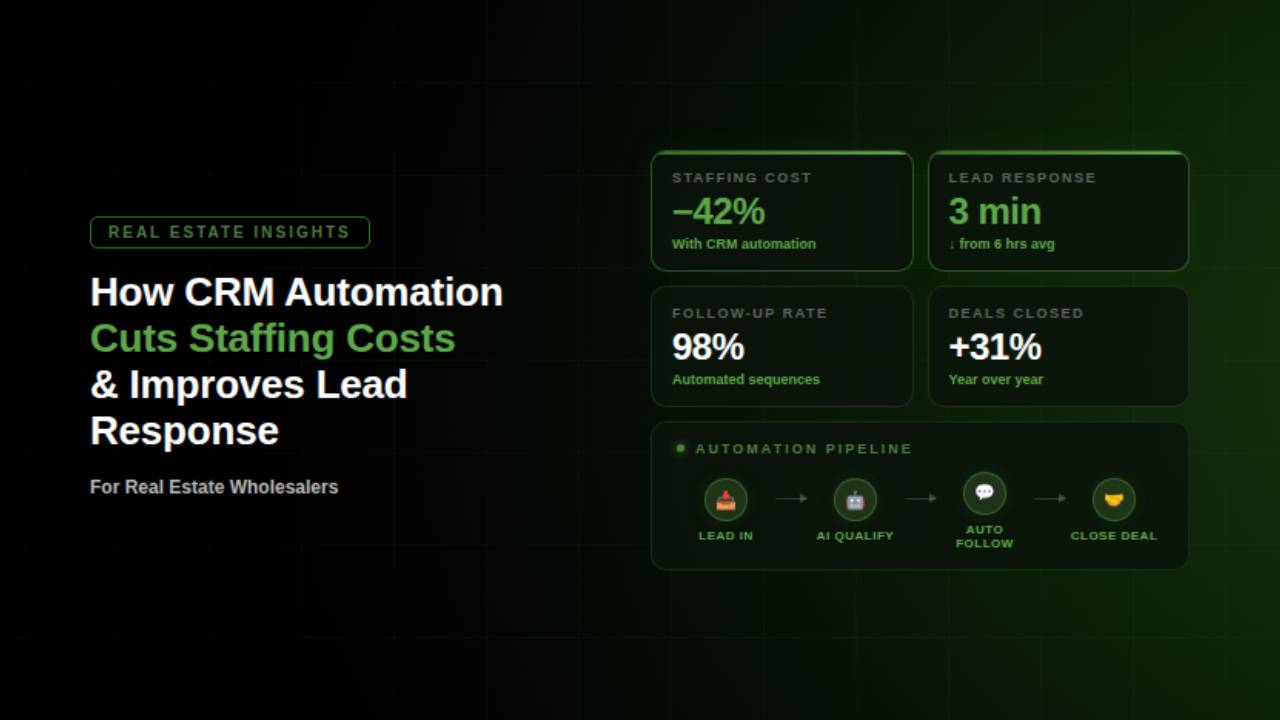
This post breaks down how CRM automation changes the economics of a wholesaling operation, covering texting workflows, AI-assisted inbound response, and intelligent lead routing, with real numbers from Closer Control clients who've made the switch.
The Staffing Problem Automation Actually Solves
Before getting into the tools, it's worth being specific about what's eating your team's time.
In a typical wholesaling operation running without structured automation, the manual workload looks like this: drafting and sending follow-up texts, logging call notes, updating lead statuses, reviewing recordings to remember what a seller said, sending reminders for offers, chasing photo requests, and tracking who needs a callback and when.
None of that is high-value work. But it consumes hours every day, across every active lead in the pipeline.
Howard Home Buyers, a Pennsylvania-based wholesaling operation run by Carey and Brian Howard, was losing 40–80 hours weekly to exactly these tasks before implementing Closer Control. That's the equivalent of one to two full-time roles consumed entirely by administrative work that produced no revenue on its own.
When Closer Control replaced that manual workflow with automation, the Howard team didn't get time back and stop there. Monthly revenue doubled within months, deal flow stabilized at 3–5 closings per month, and the operation expanded into new markets without adding headcount.
That's what CRM automation actually solves: not efficiency for its own sake, but the staffing cost of doing follow-up manually at scale.
Texting Workflows: How Automated Follow-Up Revives Dead Leads
Texting is the primary communication channel between wholesalers and motivated sellers. Sellers respond to texts faster than emails, and a well-timed text can be the difference between a deal and a dead lead.
The problem is that sending timely, relevant texts across 50, 100, or 200 active leads manually is impossible to do consistently. Someone gets missed. A follow-up that should go out on day 14 goes out on day 30, or never.
Closer Control's texting workflows automate this cadence. When a lead enters a stage, new inquiry, offer made, offer rejected, or no response, it triggers a pre-built sequence of texts timed and worded for that stage. The follow-up happens on schedule without anyone on your team tracking it manually.
The impact shows up most clearly in what happens to leads that would otherwise be marked dead.
Revite, a Minnesota-based fix-and-flip operation led by Austin Pertl, had a seller in Denver decline their offer. The lead was marked dead in their old system, no follow-up, no second contact. After moving to Closer Control, that same seller was automatically enrolled in a long-term nurture sequence. Months later, when the seller's next deal fell through, the automated follow-up had kept the conversation warm. Austin reconnected, closed the property at $690K, and assigned it at $720K, a $30K profit from a lead his old system had written off entirely.
First Glance Homes, a multi-state wholesaling operation run by Trayjen Rarden in Akron, Ohio, had the same experience. A seller who rejected an initial offer was automatically enrolled in Closer Control's Offer Rejected campaign, a long-term nurture sequence built for cold leads. Months later, automated messaging reopened the conversation. Trayjen closed the deal with a profit exceeding $30K, revenue that would have been permanently lost without the automated follow-up.
The pattern across both cases is the same: the deal existed. The manual system couldn't keep it alive. Automation did.
AI-Assisted Inbound Response: Speed Where It Matters Most
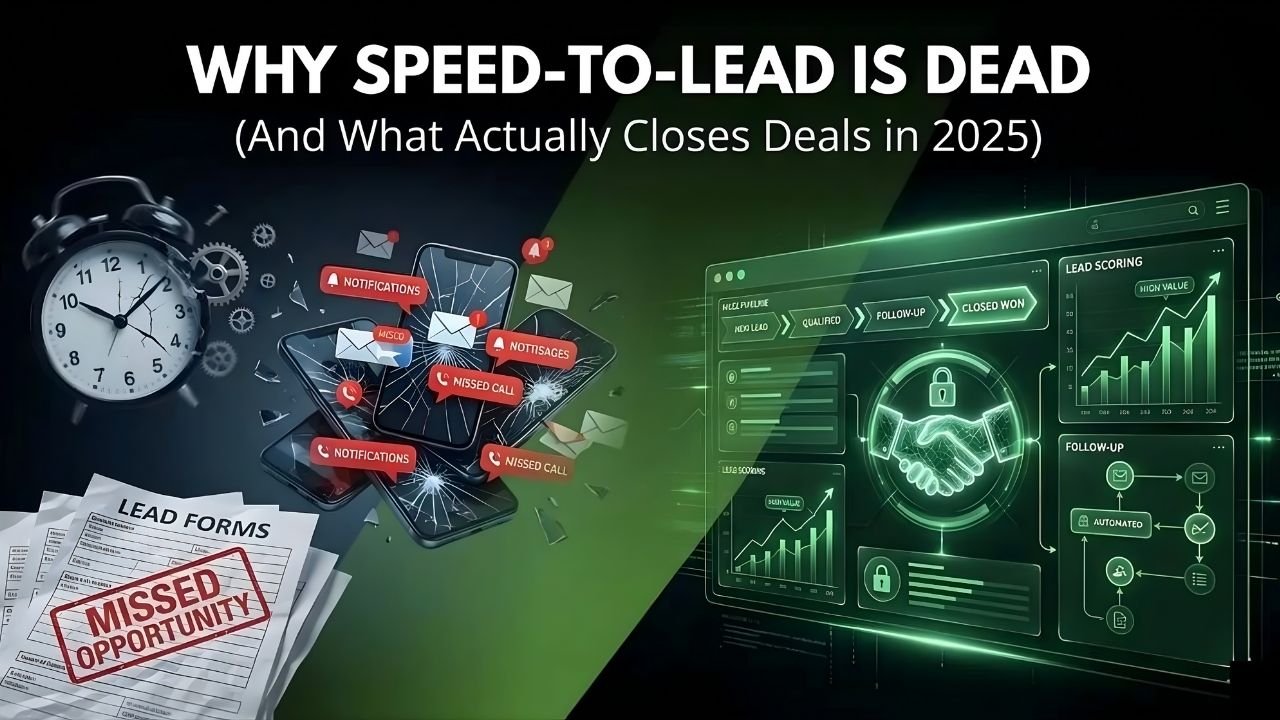
Speed to lead is one of the most documented factors in wholesale deal conversion. The wholesaler who responds first to a motivated seller inquiry has a significant advantage. In a market where sellers are often fielding multiple inquiries simultaneously, response time is a competitive edge, not a courtesy.
The problem is that inbound leads don't arrive on a schedule. A seller fills out a form at 9pm. A direct mail piece generates a callback on Saturday morning. A Facebook ad converts at 2am. Without an automated response system, those inquiries sit until someone on your team is available, hours later.
Closer Control's AI-assisted inbound response handles the initial contact the moment an inquiry arrives, regardless of time of day. The seller gets an immediate response that keeps the conversation moving while your team picks it up during business hours with full context already logged.
This is part of what Closer Control calls the AI Transformation Package, a suite of AI tools covering call handling, appointment scheduling, and lead qualification. Howard Home Buyers is currently implementing this package as their next phase of growth, to maintain consistent seller experiences as they expand into new markets without adding support staff.
Your team cannot be available around the clock. Motivated sellers don't wait. AI-assisted response fills that gap without adding headcount.
Intelligent Lead Routing: Making Sure the Right Leads Reach the Right People
A wholesaling pipeline with 80 active leads isn't useful if your acquisition team can't tell which 10 of those 80 need attention today.
Without structured routing, teams operate reactively, working whoever called most recently, whoever they happened to remember, whoever showed up at the top of an unorganized list. High-priority leads get treated the same as leads that are months away from a decision. The result is predictable: conversion rates drop, sellers lose confidence, and deals that should have closed don't.
Closer Control's intelligent lead routing uses smart lists and disposition stages to surface the right leads at the right time. Every seller sits in a specific stage: New Lead, Offer Needed, Waiting on Photos, Offer Rejected, Long-Term Follow-Up. Each stage has automated triggers and reminders attached. Your team doesn't decide who to call next. The system tells them.
Trayjen Rarden described the shift directly: before Closer Control, he spent half his day chasing details, who needed an offer, who sent photos, who he'd forgotten to follow up with. After implementing the platform, every seller was organized into focused work blocks, task-switching was eliminated, and he could move through the pipeline systematically rather than reactively.
First Glance Homes went from 1–2 inconsistent closings per month to a stable baseline of 3–5, with the confidence to increase ad spend and open new lead sources without losing control of the pipeline.
Revite saw the same pattern: a 3x estimated increase in deal volume and a $100K+ contracted pipeline within the same performance period.
What the Numbers Actually Look Like
Across the three Closer Control case studies published for the May–August 2025 performance period, the results are consistent:
Revite — Austin Pertl, Blaine, Minnesota
- 15–20 hours saved weekly
- $30K profit from a single revived dead lead
- $100K+ contracted pipeline the following month
- 3x estimated increase in deal volume
Howard Home Buyers — Carey Howard, Pennsylvania/Maryland
- 40–80 hours saved weekly, equivalent of 1–2 full-time roles
- Monthly revenue doubled within months of adoption
- Deal flow stabilized at 3–5 closings per month
- Average profit per deal: ~$30K
- 10+ referrals generated
First Glance Homes — Trayjen Rarden, Akron, Ohio
- 15+ hours saved weekly
- $30K+ deal closed from aut
When follow-up is automated, the pipeline runs on schedule regardless of what else is happening. A seller who rejected your offer three months ago gets a follow-up at exactly the right moment. A new inbound lead gets a response within minutes. A high-priority deal gets flagged for your acquisition rep before it goes cold.
omated Offer Rejected campaign - Deal flow
Your team stops doing the work a system can do better. The hours recovered go toward the conversations, negotiations, and decisions that require a person.
up from 1–2 to 3–5 closings per month - On track for $189K annual revenue from Facebook ads alone
That's what Carey Howard meant when he said: "It's like having a full lead management team working behind the scenes. We may be smaller, but we are way more efficient."
Across all three operations, the story is the same: automation didn't replace the team's ability to close deals. It eliminated the manual work that was preventing them from closing more of them.
Platform-wide, Closer Control clients closed 350+ deals in 2025, with a reported 60% reduction in average time to close and a 50% increase in lead handling capacity.
What Changes When Your Follow-Up Runs on Aumation
When follow-up is manual, your pipeline is only as reliable as your team's memory and bandwidth on any given day. Leads slip. Callbacks get delayed. Sellers go cold. The operation is reactive by nature.
When follow-up is automated, the pipeline runs on schedule regardless of what else is happening. A seller who rejected your offer three months ago gets a follow-up at exactly the right moment. A new inbound lead gets a response within minutes. A high-priority deal gets flagged for your acquisition rep before it goes cold.
Your team stops doing the work a system can do better. The hours recovered go toward the conversations, negotiations, and decisions that require a person.
That's what Carey Howard meant when he said: "It's like having a full lead management team working behind the scenes. We may be smaller, but we are way more efficient."