
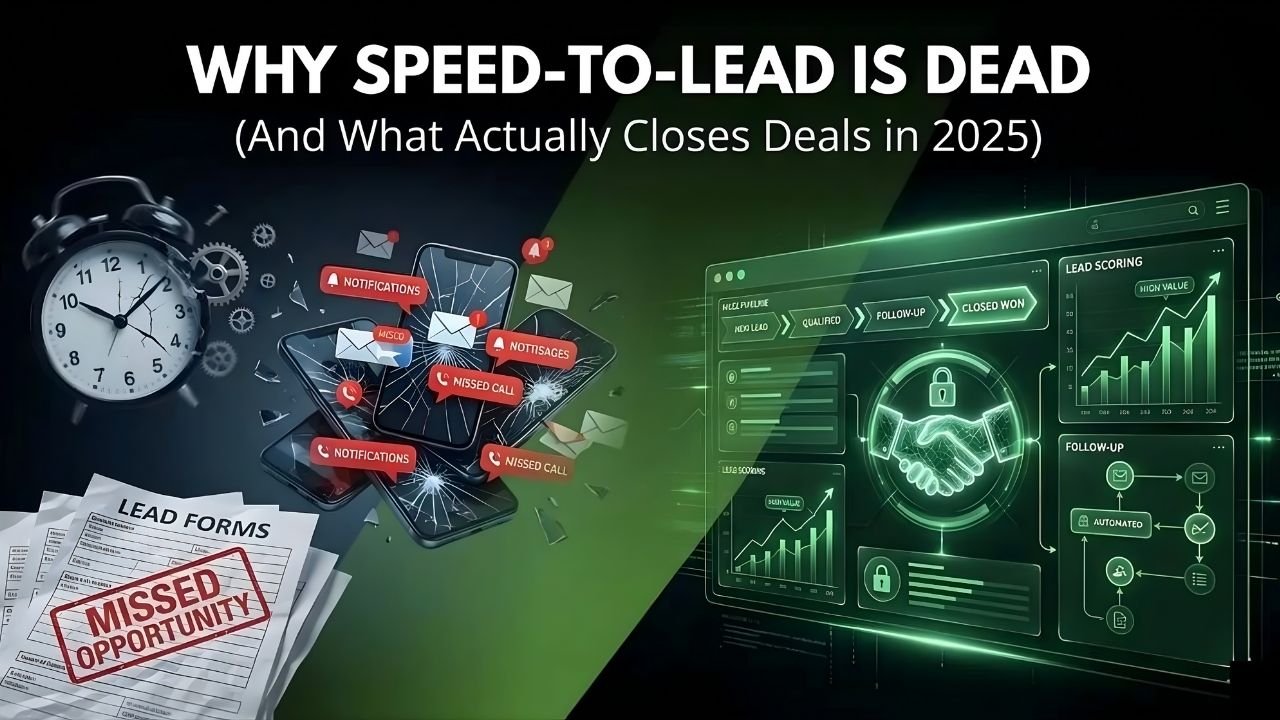
But here’s the uncomfortable truth nobody wants to admit: Speed-to-lead doesn’t close deals anymore. Consistency does. In 2025, the investors winning the most contracts aren’t the ones calling fastest — they’re the ones following up the most intelligently. Sellers aren’t choosing who responds first. They’re choosing the investor who stays present, stays consistent, and stays structured. And the industry hasn’t caught up to this shift yet.
Speed Isn’t the Problem — Disorganization Is
Most acquisition teams can reply quickly. That’s not the bottleneck anymore.
The real killer is everything that happens after the first touch:
- You follow up for 2 days… then forget the lead for 14.
- The seller responds while you’re in an appointment… and gets lost in the noise.
- You have 47 leads saying “circle back in a week,” and your CRM gives you no way to prioritize them.
- Life happens — new leads come in, old ones fall through the cracks.
Sellers don’t ghost you because you’re slow. They ghost you because you’re inconsistent. Speed-to-lead covers the first 60 seconds. The real money happens in the next 6–14 days.
Sellers Don’t Want Fast. They Want Familiar.
Here’s something most wholesalers underestimate: People sell to the investor they remember — not the one who replied first.
When sellers get multiple offers, the investor who gets the contract is almost always:
- The one who showed up more often
- The one who made the process feel organized
- The one who followed up exactly when they said they would
- The one who remembered the details of the conversation
- The one who kept the tone warm, helpful, and human
A quick first text doesn’t build familiarity. Structured, multi-touch, multi-channel follow-up does.
In 2025, Behavior-Based Follow-Up Wins
The problem with most CRMs is they treat every seller the same. But sellers behave differently.
Some open every text. Some never reply. Some click emails at 2am. Some ghost you for a week and come back ready to sign.
The investors winning in 2025 are using systems that react to these signals automatically:
- If a seller opens an email → trigger a call task
- If they ghost for 7 days → activate a nurture sequence
- If they engage heavily → move to Hit List for daily touches
- If they watch the demo → send offer
- If they book → lock reminder tasks
- If they cancel → push a salvage campaign
This is not speed. This is structure. This is seller-aware follow-up.
Why Speed-To-Lead Died
Speed-to-lead used to matter because sellers only got 1–2 investor messages per day. Now? A motivated seller wakes up to seven investors blowing up their phone. Winning isn’t about being the first. It’s about being the last one left when they finally decide. Speed gets attention. Structure earns trust. Consistency gets signatures.
So What Actually Closes Deals in 2025?
A system that:
- Gives every seller a predictable journey
- Automates tasks without removing the human touch
- Prioritizes leads based on real engagement
- Tracks context so reps don’t forget conversations
- Runs nurture for weeks without falling off
- Keeps reps focused on conversations instead of admin work
In other words… Follow-up that is automatic where it should be, and human where it matters.
The Future Belongs to Consistent Operators
Wholesalers are not losing because they’re slow. They’re losing because their systems are sloppy. The teams dominating in 2025 aren’t grinding harder — they’re following up smarter. They don’t rely on memory. They don’t rely on hope. They don’t rely on reps “remembering” to text someone back. They rely on a machine that keeps the entire seller lifecycle in motion. Speed-to-lead is dead. Structured follow-up is the new competitive advantage.