
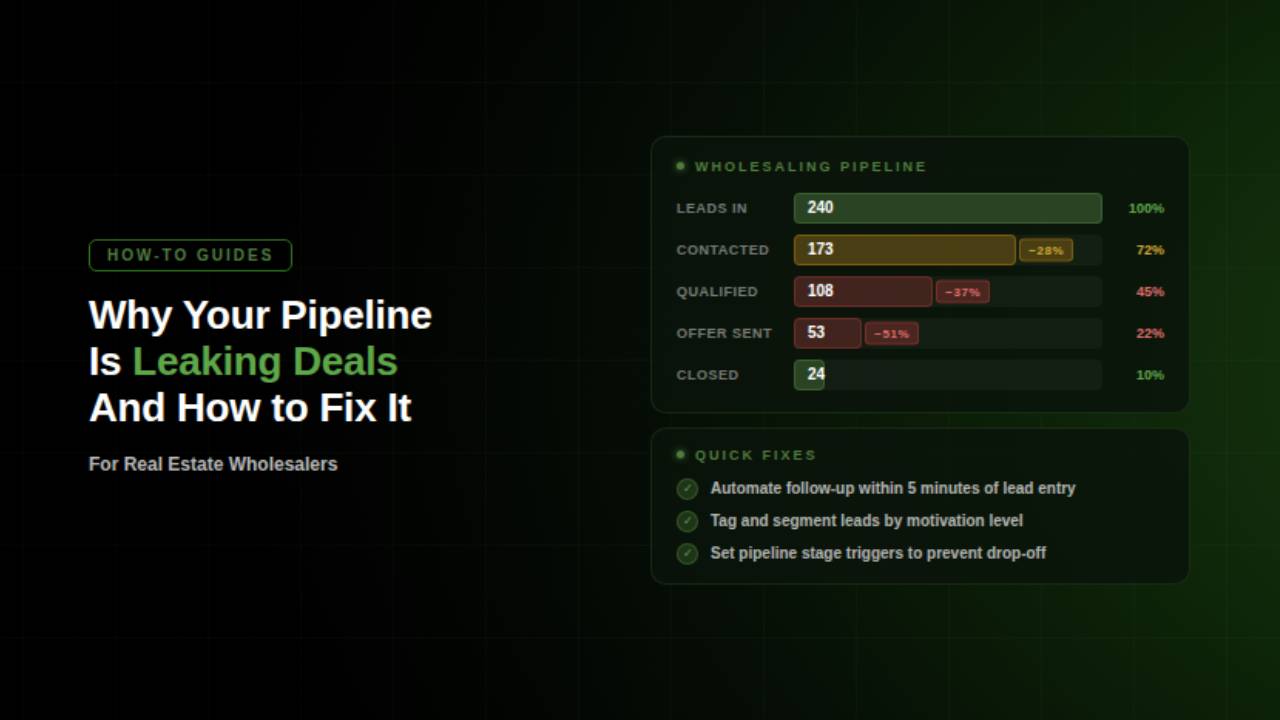
The leads are coming in. The offers are going out. Deals are closing, but not as many as they should be. Something in the middle is broken, and it's not obvious where.
Pipeline leaks in wholesale real estate follow predictable patterns. The same stages break in the same ways across operations of every size. This post identifies where the breaks typically happen, what causes them, and what a functioning fix looks like at each stage.-
The Leak at the Top: Leads Entering Without a Sequence
An off-market lead with no follow-up sequence attached isn't an asset. It's a liability on a timer.
Direct mail, cold calling, driving for dollars, PropStream lists, referrals — the channel doesn't matter. What matters is what happens the moment the lead enters your system. If the answer is "someone adds it to a list and follows up when they remember," the lead is already starting to slip.
Motivated sellers don't wait. A pre-foreclosure seller, a probate heir, a landlord done managing tenants — each of them is fielding calls from other investors. The wholesaler who responds first and stays in contact longest wins the deal. A lead sitting in a spreadsheet with no sequence attached is losing that race from day one.
The fix is structural, not behavioral. Every lead source needs a defined entry point into the CRM that automatically triggers an outreach sequence. The sequence starts the moment the lead is captured — not the moment someone gets around to it.
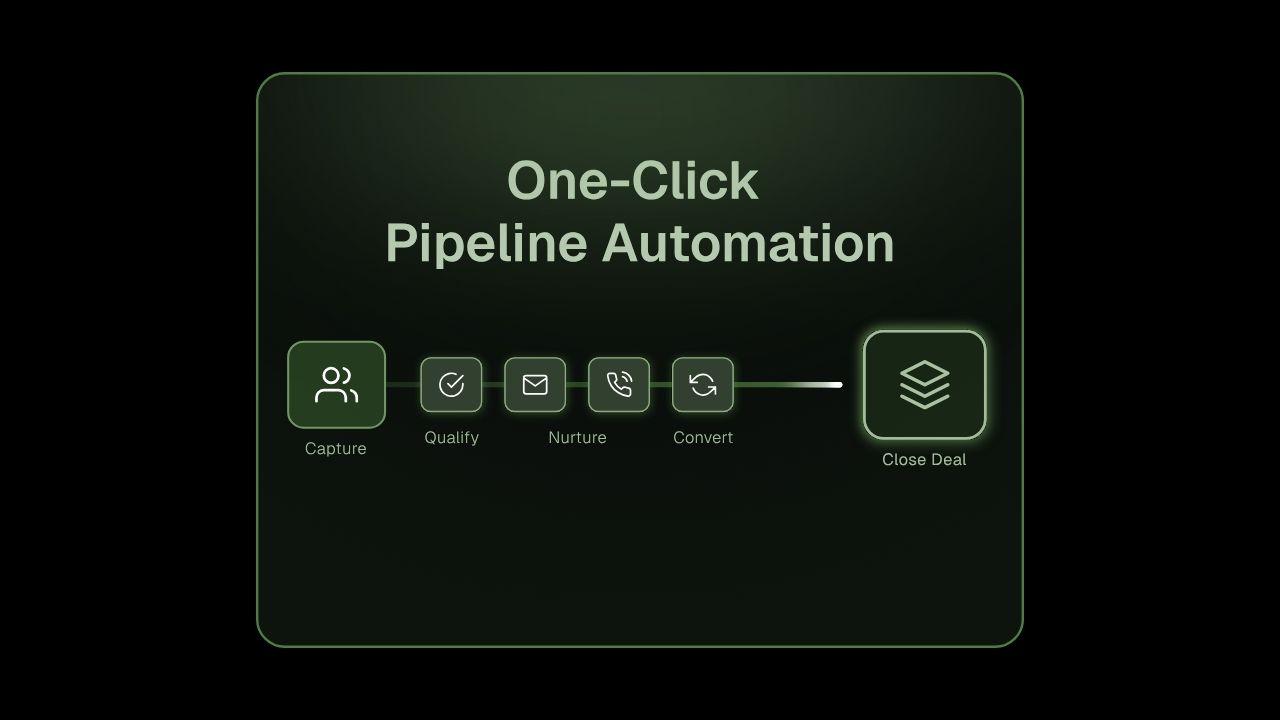
Inside Closer Control, every lead enters at a specific pipeline stage with outreach attached. SMS, email, and voicemail drops go out on a defined schedule based on the stage, not based on who remembered to follow up.
The Leak in the Middle: Offers That Die After the First No
An offer rejection is where most pipeline leaks are worst — and where they're most invisible.
A seller declines. The lead gets marked dead. The acquisition rep moves on. In a manual operation, that's where the story ends. In reality, it's where the opportunity begins.
Sellers who reject initial offers aren't saying no permanently. They're saying no now. Their situation will change — the foreclosure date gets closer, the estate dispute gets messier, the inherited property sits vacant for another three months. When that moment arrives, the wholesaler who kept showing up is the one who gets the call.
The Offer Rejected stage is the most underleveraged stage in most wholesaling pipelines. It should trigger a long-term nurture sequence — not a dead file.
What that sequence looks like in practice: a series of SMS and email touches at defined intervals, calibrated for a seller who has already heard your pitch and said no. The messages aren't aggressive. They stay light, relevant, and present. They keep your name in the seller's inbox without pressure — so when their situation shifts, reaching out to you is the path of least resistance.
Closer Control's Offer Rejected campaign automates this entire sequence. The lead stays in the pipeline. The outreach keeps running. Your team doesn't have to track it or remember to follow up. The system does it until the seller responds or opts out.
The Leak in the Follow-Up Cadence: Inconsistency Across Lead Volume
A follow-up system that works at 30 leads breaks at 100. A system that works at 100 breaks at 300. The cadence that feels manageable when the pipeline is small becomes impossible to sustain manually as volume grows.
The symptoms show up before the deals do. Team members start prioritizing newer leads over older ones. Follow-up intervals stretch from days to weeks. Sellers who were warm three months ago get a call that feels like a cold outreach because the context from earlier conversations was never logged.
The root cause is the same in every case: the follow-up cadence is person-dependent, not system-dependent. When the person is stretched, the cadence collapses.
Fixing this requires removing the human dependency from the parts of follow-up that don't require a human. Scheduling, timing, stage-based messaging, and re-engagement triggers should all run automatically. The person steps in for the conversations that require judgment — negotiating, building rapport, closing. Everything in between runs on the system.
Closer Control's smart lists organize every lead by stage and surface the right contacts for your team at the right time. Automated sequences handle the outreach between human touchpoints. AI Call Summaries log every conversation so the next contact has full context. The cadence doesn't depend on memory or bandwidth. It runs on structure.
The Leak at Disposition: Slow Buyer Matching
A deal under contract with no buyer lined up is a clock running out.
Assignment fees get left on the table when disposition takes too long — sellers get nervous, timelines compress, and the scramble to find a buyer in 48 hours produces worse outcomes than a matching process that takes 48 minutes.
The disposition leak is almost always a buyer list problem. Specifically: a buyer list that exists but isn't organized in a way that makes fast matching possible.
Every buyer in your network has specific criteria — property type, location, price range, condition tolerance, timeline. If that data isn't captured and segmented inside your CRM, finding the right buyer for a new contract means calling down a list manually and hoping the first few picks are relevant. That process is slow, error-prone, and relationship-damaging when buyers get calls about deals that don't fit their criteria.
The fix: buyer profiles with preference data, segmented by criteria, living inside the same CRM as your seller pipeline. When a new contract comes in, your team pulls the relevant buyer segment immediately and works from a short, targeted list rather than a broad one.
Closer Control centralizes buyer and seller management in one pipeline. Acquisition and disposition teams have visibility into both sides of every deal simultaneously. When a contract comes in, the buyer matching process starts in the same platform, with the same data, without switching tools.
The Leak at Re-Entry: Cold Leads with No Path Back
A lead marked cold isn't necessarily a dead deal. It's a deal with no scheduled next contact.
Cold leads accumulate in every operation — sellers who went quiet, contacts who said call me in six months, referrals that never converted on first outreach. In a manual operation, these leads sit in a pile that nobody has time to work systematically. In a structured operation, they're enrolled in a long-term nurture sequence with a clear re-entry trigger.
The re-entry trigger is the mechanic that matters. When a seller in a long-term sequence responds — whether it's been two weeks or eight months — the system flags it immediately and moves the lead back to an active stage. The acquisition rep picks it up with full conversation history. The re-engagement feels like a continuation, not a cold call.
Closer Control's pipeline handles this automatically. Every seller stays in the system at the right stage with the right sequence running. No lead exits without a path back in. The only way a deal is truly dead is if the seller explicitly opts out.
Where to Start
Running through each of these stages with your current pipeline will surface where the leak is largest. For most operations, the biggest hole is the Offer Rejected stage — leads that were marked dead after a first no that should have stayed in a long-term sequence.
Start there. Build the sequence. Let it run for 90 days. The deals that come back from it will tell you more about your pipeline health than any metric dashboard.